

In the 20th century, the most valuable companies laid roads, built railways, and pumped oil.
In the 21st, they build software, manage data, and protect the digital lives of billions.
Cybersecurity is no longer a “nice-to-have.” It’s becoming the backbone of modern infrastructure. Backbone not made of concrete or steel, but of encryption, architecture, and trust.
As a career security consultant and penetration tester with over 15 years in the industry, I’ve seen the shift firsthand. Today, cyber threats impact not just companies, but entire supply chains, governments, and economies. The companies that defend against this chaos are quietly becoming as essential as utilities.
So how do we invest in this?
Not with hype. Not with buzzwords.
But with timeless principles — like value and quality investing, inspired by Buffett, Fisher, and even (too some extent) Graham.
🛡 Cybersecurity = Digital Infrastructure
Without cybersecurity:
Banks can’t process payments safely
Hospitals can’t protect patient records
Cloud providers can’t keep data secure
AI models can be manipulated
Critical infrastructure can be shut down
The trust layer of the global economy is built on cybersecurity. It’s not just a sector. It’s infrastructure — made not of concrete, but of encryption, architecture, and vigilance.
💡A Value Framework for the Digital Age
We approach cybersecurity through the lens of quality first, price second.
In an era of weak currencies and abundant credit, the line between “expensive” and “fair” has blurred. A high price today might simply reflect tomorrow’s inflation — not overvaluation, but the quiet erosion of money itself.
That’s why the only reliable anchor of value is quality — businesses with moats strong enough to preserve real productive power over time.
Traditional value investing taught us to buy cheap — or more precisely, well below intrinsic value.
But in the 21st century, valuation has become increasingly complex. We no longer deal in hard assets easily found in book value, but in intangibles such as code, data, network effects, unique skill sets, intellectual property, and — perhaps most elusive of all — trust.
These are the true engines of earning power. The modern moat has shifted from factories and inventory to relationships, reputation, and the capacity to scale intelligence.
Meanwhile, the monetary erosion that surfaced in full after the mid-20th century has only accelerated, distorting the meaning of traditional metrics like price-to-earnings or book-to-value (the latter being basically useless in IT).
In a world where nominal prices rise as currencies weaken, cheapness can be an illusion.
Real value lies in resilient systems — firms that transform intelligence, trust, and capital into durable advantage.
In that sense, Munger’s insight has aged better than most spreadsheets: it’s worth paying up for excellence. When money itself keeps losing substance, a business that compounds real value is the rarest bargain left.
As Naval Ravikant once noted,
“Technology democratizes consumption but consolidates production.”
The digital age rewards quality over quantity. A handful of exceptional producers now generate most of the world’s real value, while capital keeps flowing toward illusion and noise.
In a world of soft money, moats built on competence, trust, and necessity are the hardest assets left.
That’s the essence of our framework:
Buy quality. Hold endurance. Let time build real wealth.
🌍 Undervalued Markets = Hidden Gems
We’ll look for exceptional quality in places most investors ignore:
Small caps not yet covered by analysts
Foreign markets where cybersecurity is booming but underreported
Spin-offs or companies buried inside conglomerates
Post-hype firms with real cash flows and forgotten brand equity
Our edge is not chasing what’s hot. It’s knowing what’s durable.
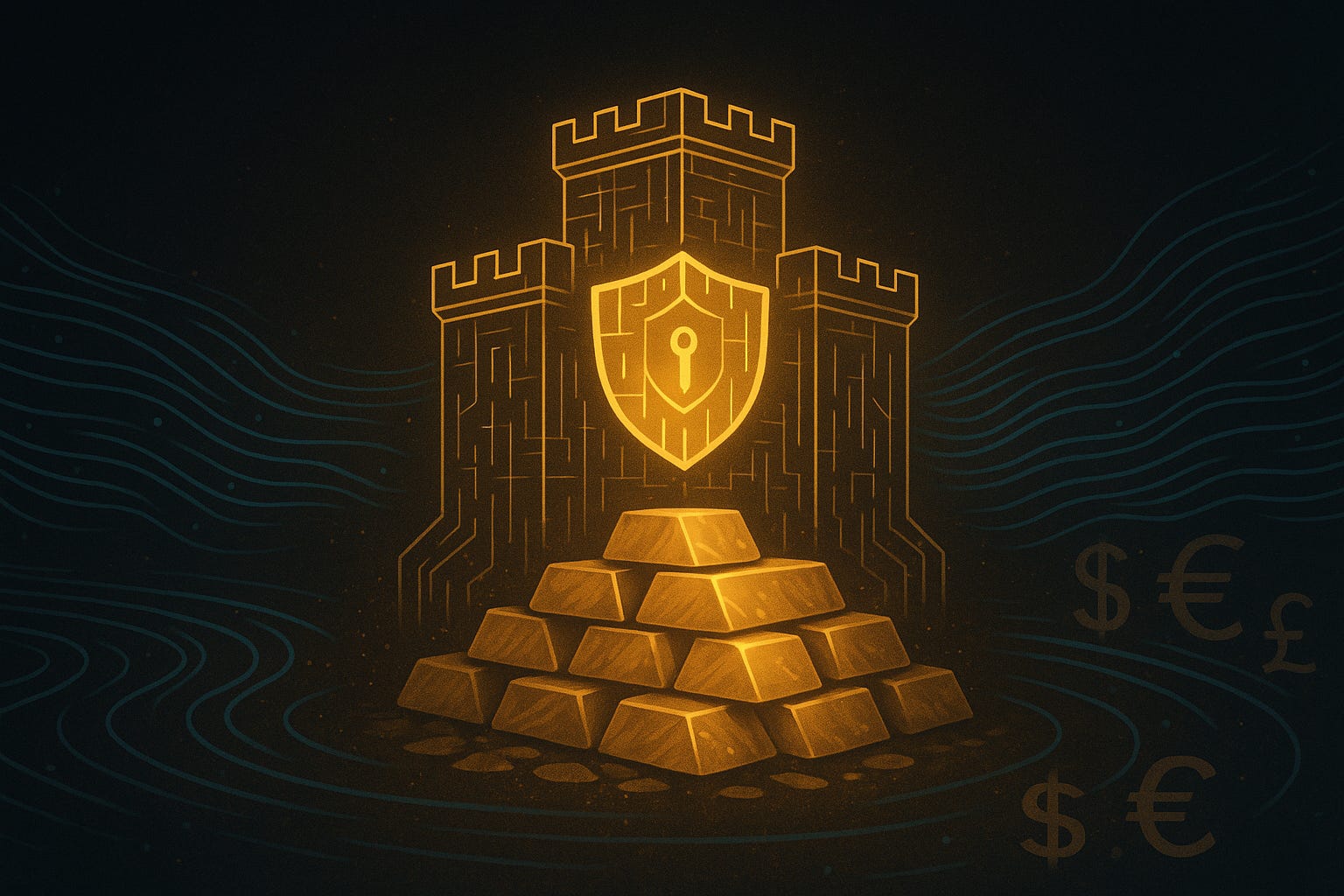
🏰 The Moat Matters
Buffett always looked for companies with moats — long-term competitive advantages.
In cybersecurity, a moat might be:
A data advantage that grows with use
Deep integration in enterprise workflows (high switching costs)
A trust-based brand with certifications and compliance built-in
A rare skill set — cryptography, secure architecture, or large-scale detection — that’s not easily replicated.
We’re not chasing buzzword vendors. We’re interested in real businesses that will still matter a decade from now.
🔭 Why This Matters
In a fiat-driven, credit-extended world, much of what passes for “growth” is leverage and illusion.
But security — in its truest sense — produces real value: resilience, stability, and trust.
It’s perhaps one of the few domains where the product is the absence of chaos.
And that, paradoxically, is priceless.
🧩 What to Expect
CyberMoat isn’t a fund. It’s a thesis — and this newsletter is its laboratory.
Expect:
Company analyses grounded in fundamentals
Occasional essays on the philosophy of value and security
Reflections on markets, technology, and incentives — where systems succeed or fail
Original thoughts from someone with feet in both the server room and the balance sheet
If you’re interested in:
✅ Cybersecurity as a business model
✅ Investing with discipline, not hype
✅ Finding digital moats before they’re obvious
Then welcome aboard.
We’re here to invest in security — securely.